

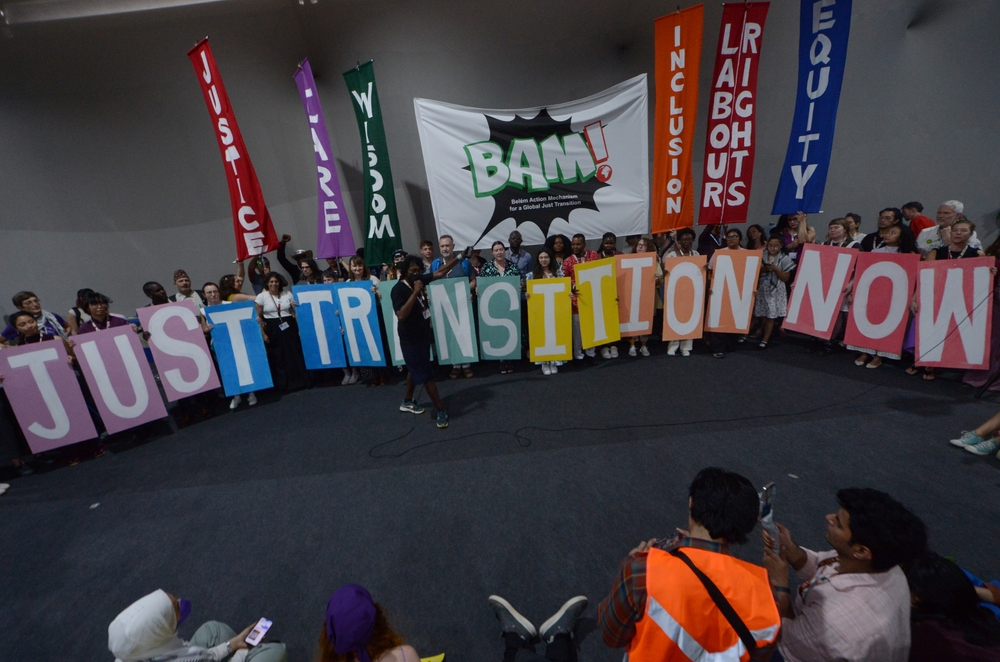
Activists highlighted climate impacts in their home countries and called for youth representation in UN negotiations. Thousands of protesters gathered at the gates of the COP30 United Nations climate conference in Belem, Brazil, staging a peaceful standoff outside the venue.
Brazilian youth organizations, Indigenous communities, and global climate activists marched together, demanding urgent action during the critical UN climate meeting. Members of the Fridays for Future movement emphasized that young people, as inheritors of the planet, must have a voice in climate decision-making.
Rachelle Junsay from Climate Action Philippines described the frustration of youth watching leaders negotiate while ignoring communities already suffering from climate impacts. She said decision-makers sit in air-conditioned negotiation rooms, discussing policies that directly affect people not included in the conversation. Junsay stressed that these discussions concern the survival of entire species and the future of generations yet to come.
Public Demonstrations Resume After Three-Year Pause
Protesters returned to demonstrate outside UN climate talks for the first time since 2021. Organizers promoted the conference as a platform celebrating Indigenous voices and empowering local communities, yet demonstrators felt the need to push for stronger inclusion.
Earlier in the week, activists disrupted the talks twice, surrounding the venue. One incident on Tuesday resulted in minor injuries to two security guards. Saturday’s march intentionally stopped short of the venue, where a full schedule of sessions continued uninterrupted.
Many participants appreciated the freedom to protest more openly in Belem compared with recent summits in Azerbaijan, the United Arab Emirates, and Egypt. Youth leader Ana Heloisa Alves, 27, called it the largest climate march she had ever joined and emphasized that such public presence could not be ignored. Alves specifically campaigned for the Tapajos River, opposing commercial development by the Brazilian government. Her group carried signs declaring that the river belongs to the people, reflecting a wider struggle to protect local ecosystems from industrial projects.
Calls for Broader Participation and Global Accountability
Pablo Neri, coordinator for the Movimento dos Trabalhadores Rurais Sem Terra in Pará, urged UN organizers to include a broader range of voices in climate discussions. He argued that the climate movement increasingly relies on popular participation to reflect the concerns of communities directly affected by environmental crises.
The COP30 talks are scheduled to continue through Friday, 21 November. Analysts and participants predicted limited breakthroughs, noting that major new agreements may not emerge. Many, however, remain hopeful for progress on prior commitments, including financial support for poorer nations to adapt to climate change and strengthen resilience against extreme weather events.
The United States has chosen to skip the summit. President Donald Trump has publicly dismissed climate change as a hoax and withdrew the country from the 2015 Paris Agreement, which aimed to curb global warming. This absence underscores tensions in international climate cooperation and highlights the critical role of youth, Indigenous communities, and civil society in pressuring nations to act responsibly.
Activists emphasized that future climate policies must include those most affected, and youth leaders vowed to continue advocating for representation and accountability. Their actions demonstrate that global climate negotiations cannot succeed without incorporating the voices of the next generation and the communities on the frontlines of environmental change.

