

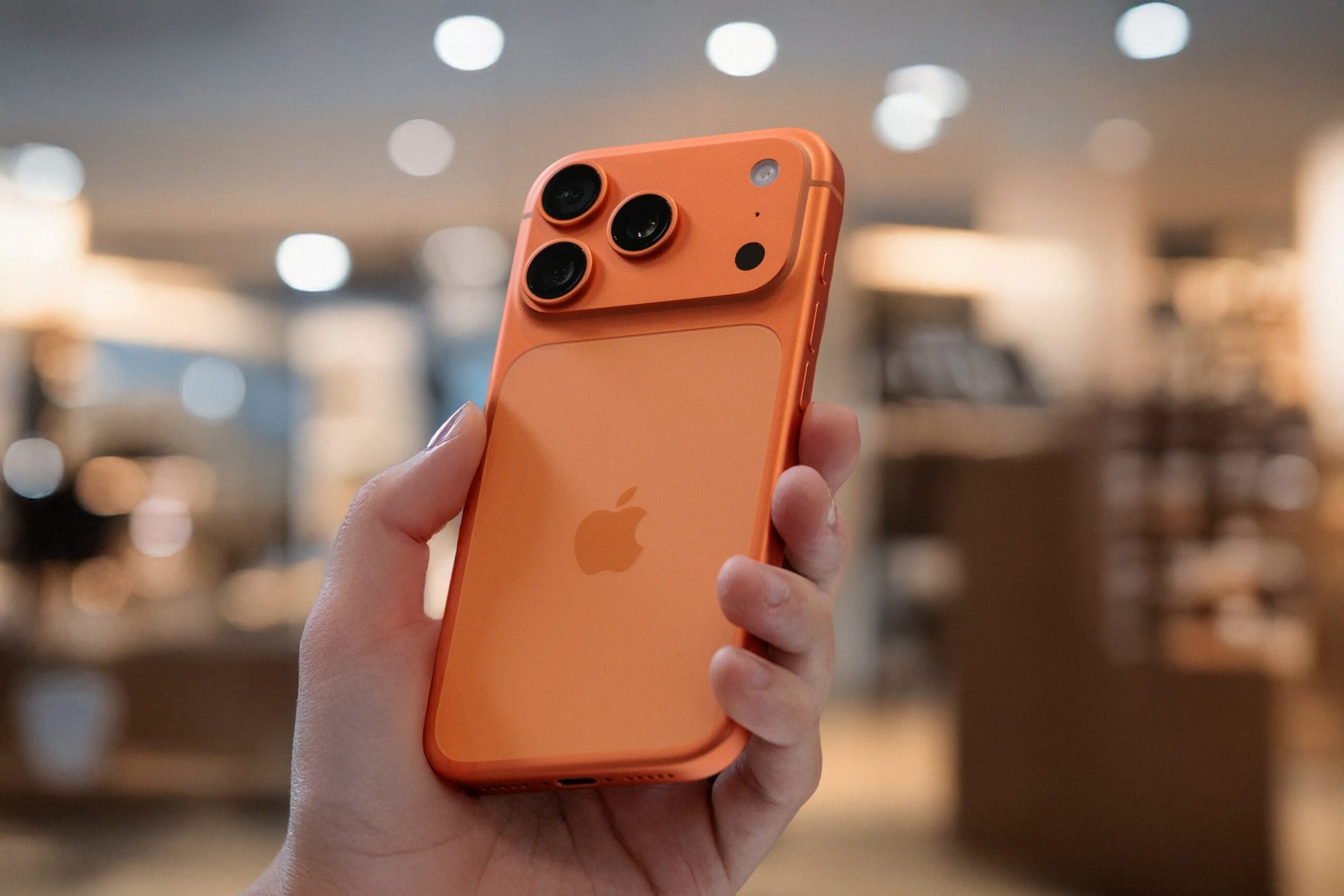
Strong iPhone sales pushed Apple’s revenue higher in the three months ending in September, closing its fiscal year with record profits. Apple surpassed most expectations despite facing a global trade war and racing to catch up in artificial intelligence. The company credited its strong results to surging demand for the iPhone 17 series, which debuted last month.
Tim Cook announced a record September quarter revenue of $102.5 billion, including all-time highs for iPhone and Services. Driven by this success, Apple earned $27.5 billion (€23.8 billion), almost doubling its profit from last year. The company’s shares climbed 2% in after-hours trading.
Although the iPhone 17 lacks advanced AI tools featured in rival Samsung and Google devices, Apple refreshed the design with a “liquid glass” display. The company also held prices steady, even while absorbing $1.1 billion (€950 million) in tariffs from U.S. trade policies. Apple expects an additional $1.4 billion (€1.2 billion) tariff impact during the next quarter.
The new iPhones captured strong consumer interest in the United States and Europe, generating $49 billion (€42.4 billion) in sales, a 6% rise from last year. Analysts had projected an 8% gain, below the 13% increase during April–June.
Ben Barringer, head of technology research at Quilter Cheviot, reported that Mac sales climbed 12%, iPhone sales rose 6%, while iPad and wearables remained flat. He noted that weak demand in China dragged results down by 4%, citing supply limits and forecast errors. IDC estimated Apple sold 58.6 million iPhones globally, trailing Samsung’s 61.4 million Android sales.
Apple ended its fiscal year with a record net income of $112 billion (€96.8 billion), up 20% from the prior year.
Anticipating a Strong Holiday Surge
During a call with analysts, Tim Cook predicted continued strong performance for the iPhone 17 through the holiday season. Apple’s chief financial officer, Kevan Parekh, projected at least a 10% rise in iPhone sales compared to last year’s holiday period, with total revenue expected to grow at a similar pace.
Barringer described Apple’s first-quarter forecast of 10–12% revenue growth as robust, driven by persistent demand for the iPhone 17 heading into the Christmas season.
Market Value Soars Amid AI Challenges
Apple’s stock surged after a report from International Data Corp. confirmed record iPhone sales for July–September. The rally pushed Apple’s market value above $4 trillion for the first time, setting up another potential high during Friday’s trading.
Despite the success, Apple continues to lag in AI innovation, a space dominated by Nvidia, which recently became the first $5 trillion company. Apple had promised new AI features for last year’s iPhones but delivered only a few, delaying the enhanced Siri update until next year.
Barringer questioned whether Apple’s slower AI progress can sustain investor enthusiasm. He warned that uncertainties in China and stronger growth from rivals like Microsoft and Nvidia might redirect investors’ attention elsewhere.
Still, Apple often rebounds after slow starts in emerging technologies. Wedbush Securities analyst Dan Ives predicted that deeper AI integration could add $1 trillion (€860 billion) to $1.5 trillion (€1.3 trillion) in market value, potentially raising Apple’s stock by $75 to $100 per share.

