

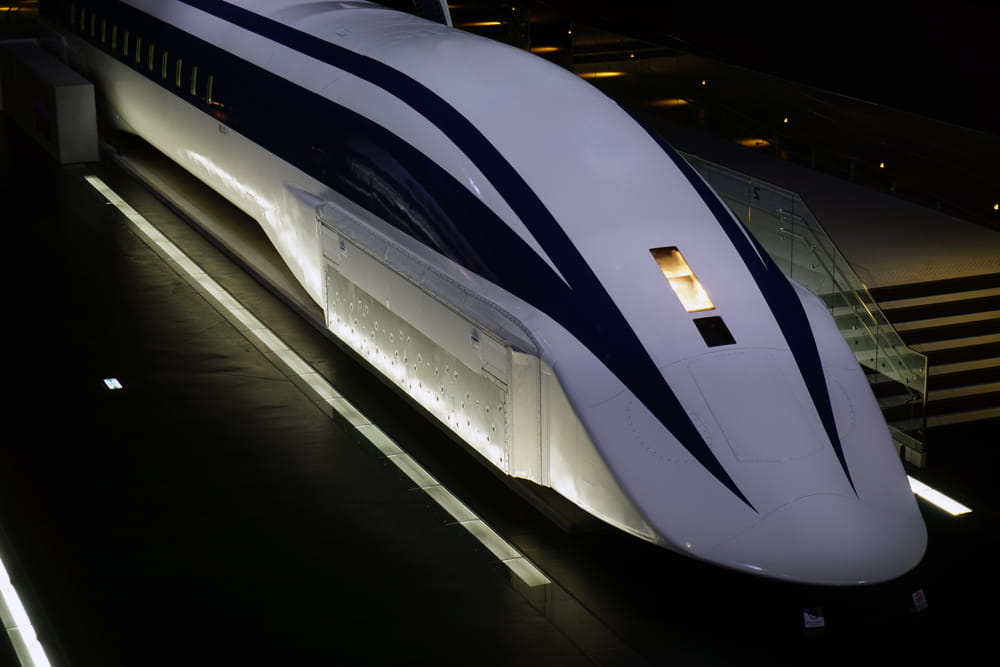
Japan is developing the L0 Series, a next-generation maglev train that could reach 603.5km/h, making it the fastest train ever built. The project is being led by Central Japan Railway Company and will operate on the new Chuo Shinkansen line.
If completed as planned, the L0 Series would cut travel time between Tokyo and Nagoya to about 40 minutes, and eventually link Tokyo, Nagoya and Osaka into a single mega-commuter region. For comparison, Europe’s fastest services, such as the TGV and Italy’s AGV Italo, run at around 300–350km/h.
The L0 Series uses magnetic levitation, lifting the train above the track to eliminate friction and allow extreme speeds. However, the technology is expensive: costs have already reached roughly £52bn (€60bn), and the project has been delayed, with opening now expected in the mid-2030s.
While the idea excites rail fans, experts say Europe is unlikely to adopt the system soon. Maglev trains require entirely new, tunnel-heavy infrastructure, consume more energy than conventional high-speed rail, and carry fewer passengers. European rail networks also prioritise comfort, scenery and integration with existing lines—factors that work against ultra-high-speed maglev outside a few business-focused routes.

