

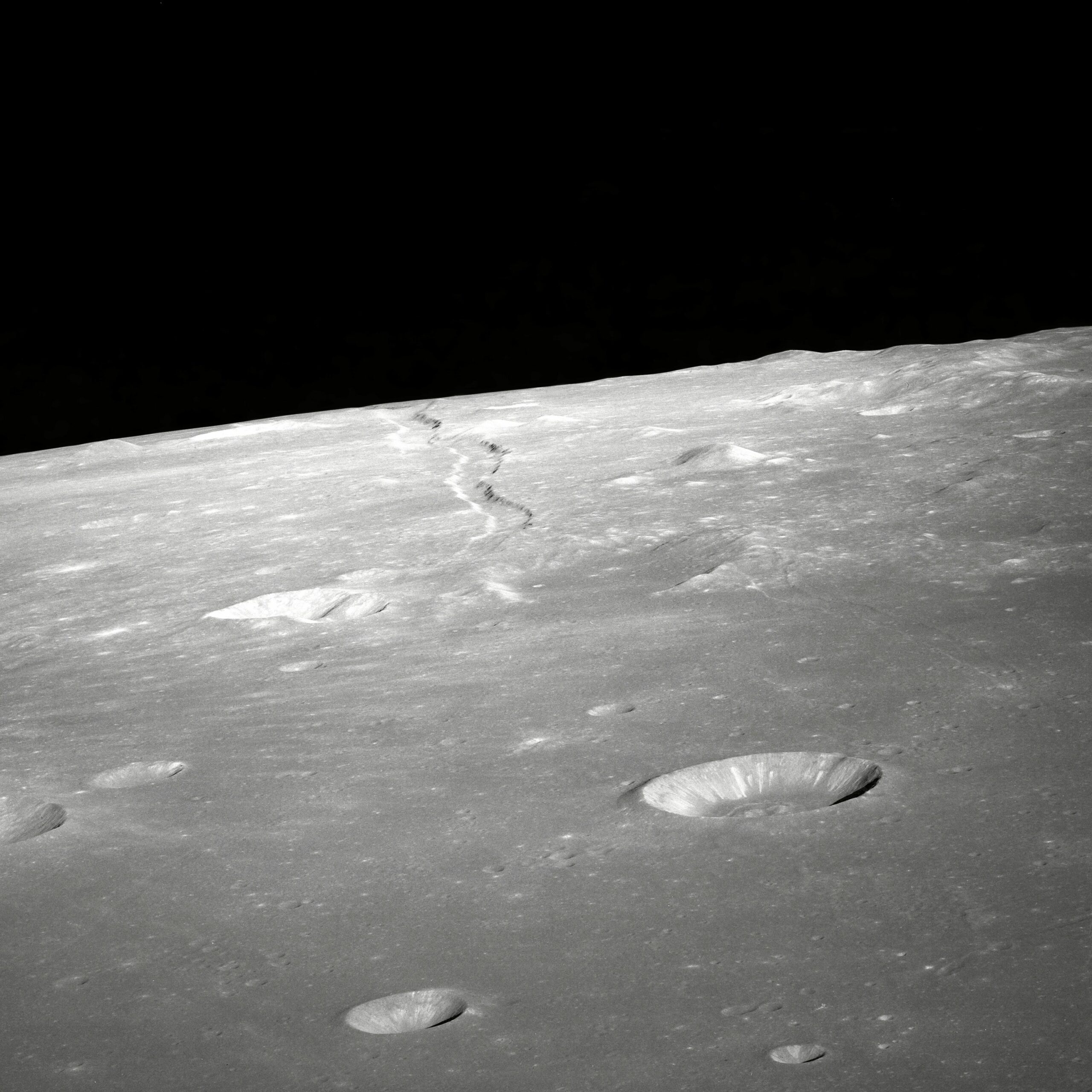
Scientists believe Theia, the Moon’s precursor, disappeared billions of years ago without leaving direct evidence.
Astronomers in France, Germany, and the United States analysed lunar and terrestrial rocks to locate its origin.
They propose Theia likely formed much closer to the Sun than previously thought.
For decades, scientists have argued that Theia collided with early Earth about 4.5 billion years ago.
Debris from that impact created the Moon, mixing material from Theia into both bodies.
The giant impact theory emerged after Apollo samples first revealed clues more than 50 years ago.
Because Theia vanished, researchers faced challenges tracing its composition and birthplace.
Jake Foster of the Royal Observatory Greenwich highlighted the study’s precision in pinpointing the vanished planet’s origin.
He explained that scientists can now map a planet that vaporized billions of years ago.
Reverse Engineering Ancient Worlds
Researchers examined isotopes in Earth rocks and Apollo lunar samples to reconstruct Theia’s composition.
These isotopes act as chemical fingerprints, revealing the formation conditions of each sample.
Earth and Moon rocks share nearly identical metal isotope ratios, complicating efforts to distinguish Theia’s material.
The team applied planetary reverse engineering, modelling hundreds of scenarios for Earth and Theia interactions.
They tested iron, chromium, zirconium, and molybdenum isotopes to find combinations that match current samples.
Materials formed closer to the Sun under different temperatures, producing distinct isotopic patterns across the Solar System.
Comparing these patterns allowed researchers to conclude Theia likely formed inside Earth’s orbit.
Earlier studies suggested Theia might have originated farther from the Sun, but these new results contradict that.
Insights Into Planetary Evolution
Scientists hope this study improves understanding of early planetary formation and collisions.
The research could guide future studies of how planets grow and interact in young solar systems.
Astronomers believe tracing Theia provides critical insight into the processes that shaped Earth and the Moon.
This approach demonstrates how isotopic analysis can reveal details about vanished planetary bodies.
Researchers aim to apply similar techniques to study other early Solar System objects.
Understanding Theia’s origins may reshape models of planetary evolution and the dynamics of young star systems.
The study emphasizes that even vanished planets can leave detectable clues in surviving material.

