
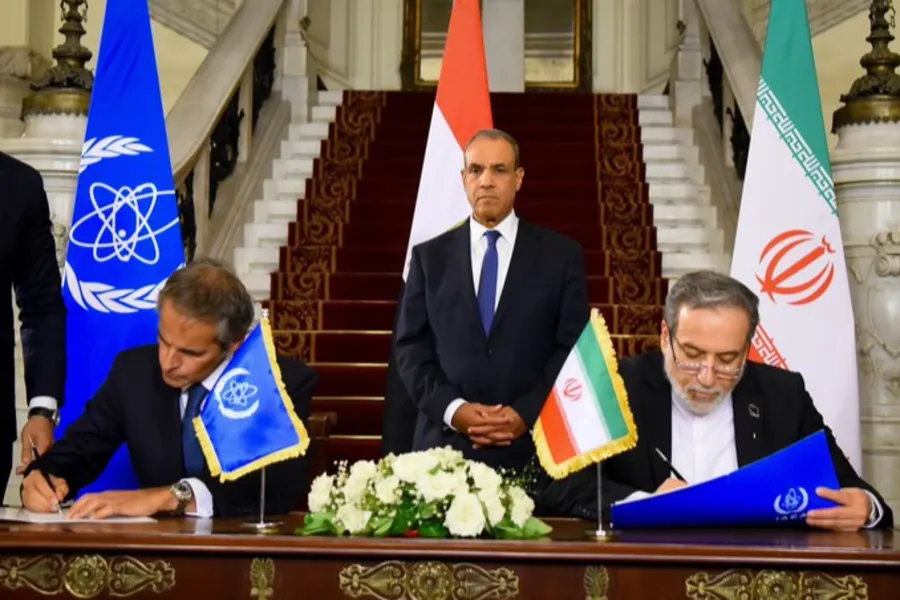
Iran and the International Atomic Energy Agency (IAEA) signed a new nuclear agreement on Tuesday aimed at renewing cooperation and preventing potential snapback sanctions by the E3, the United Kingdom, France, and Germany. The deal was formalized in Cairo, Egypt, following meetings between Iranian Foreign Minister Abbas Araghchi, IAEA Director Rafael Grossi, and Egyptian Foreign Minister Badr Abdelatty.
The announcement offered few details about the agreement, raising questions about its scope. Iran’s parliament passed a law in July suspending all cooperation with the UN nuclear watchdog. While President Masoud Pezeshkian signed the law, ultimate authority lies with Supreme Leader Ayatollah Ali Khamenei.
Iran halted cooperation with the IAEA following Israeli strikes on June 13, which led to a 12-day conflict. This latest agreement represents the first step toward resuming cooperation and fulfilling Iran’s responsibilities under the nuclear Nonproliferation Treaty (NPT). Grossi described the deal as “a step in the right direction,” signaling progress in diplomatic efforts.
The exact status of inspections remains uncertain. Israeli and U.S. strikes on Iran’s nuclear sites at Isfahan, Fordow, and Natanz complicate the resumption of monitoring. Since the end of the conflict, IAEA inspectors have only accessed the Bushehr Nuclear Power Plant, which operates with Russian support.
Conflicting statements from Grossi and Araghchi have raised doubts about whether the agreement will prevent the E3 from imposing snapback sanctions. Grossi told the IAEA Board of Governors that the deal restores “complete” access for inspectors to Iran’s nuclear facilities. He added that the “technical document” outlines practical steps to resume inspections, covering all sites, including those affected by attacks and the nuclear material present there.
Araghchi, however, told Iranian state media that the agreement does not currently grant access to IAEA inspectors beyond Bushehr. The discrepancy has fueled uncertainty over Iran’s compliance and the potential effectiveness of the agreement.
E3 representatives expressed skepticism in a statement to the IAEA Board. They highlighted that the July 2 law suspended IAEA access to all safeguarded facilities except Bushehr and that Iran has not provided legally required reports on its nuclear program since June 13. The E3 warned that the agency has lost continuity in tracking Iran’s nuclear material, including high-enriched uranium, stressing that this is a matter of global concern.
The E3 also noted that Iran has sought “separate” arrangements outside the IAEA’s verification mandate instead of renewing standard access for inspectors. They emphasized that prior experience must guide future actions. The statement warned that if full resumption of inspections and safeguards is not evident by the next Board meeting, the E3 will consider reporting Iran’s non-compliance under the IAEA Statute and June resolutions. This could trigger snapback sanctions by the end of September.
The E3 stressed that full Iranian cooperation and implementation of legal safeguards are critical for achieving a lasting resolution to concerns about Iran’s nuclear activities. Without it, diplomatic progress remains at risk, and the possibility of sanctions looms.
The Cairo agreement represents a tentative step toward dialogue and monitoring, but uncertainties persist. Inspectors’ limited access, domestic Iranian laws, and ongoing regional tensions mean that practical enforcement and transparency will be closely watched by the IAEA and international partners.
Analysts note that the coming weeks will be decisive. The IAEA must verify Iran’s nuclear sites comprehensively, while Tehran faces pressure to comply fully to avoid renewed sanctions. How Iran navigates this process will have major implications for regional stability, nuclear diplomacy, and the broader Nonproliferation Treaty framework.
As both sides work to implement the agreement, the world remains attentive to whether this development will lead to meaningful cooperation or remain a symbolic gesture. The outcome will shape international confidence in Iran’s commitment to transparency and legal obligations under global nuclear agreements.

